Fiberglass or 3D Printing for a Sculpture?
Both processes start from your model, but they suit different work. A practical comparison of fiberglass and 3D printing for artists: size, detail, finish, outdoor use and cost.
Published 2026-11-21 · HengSculpt
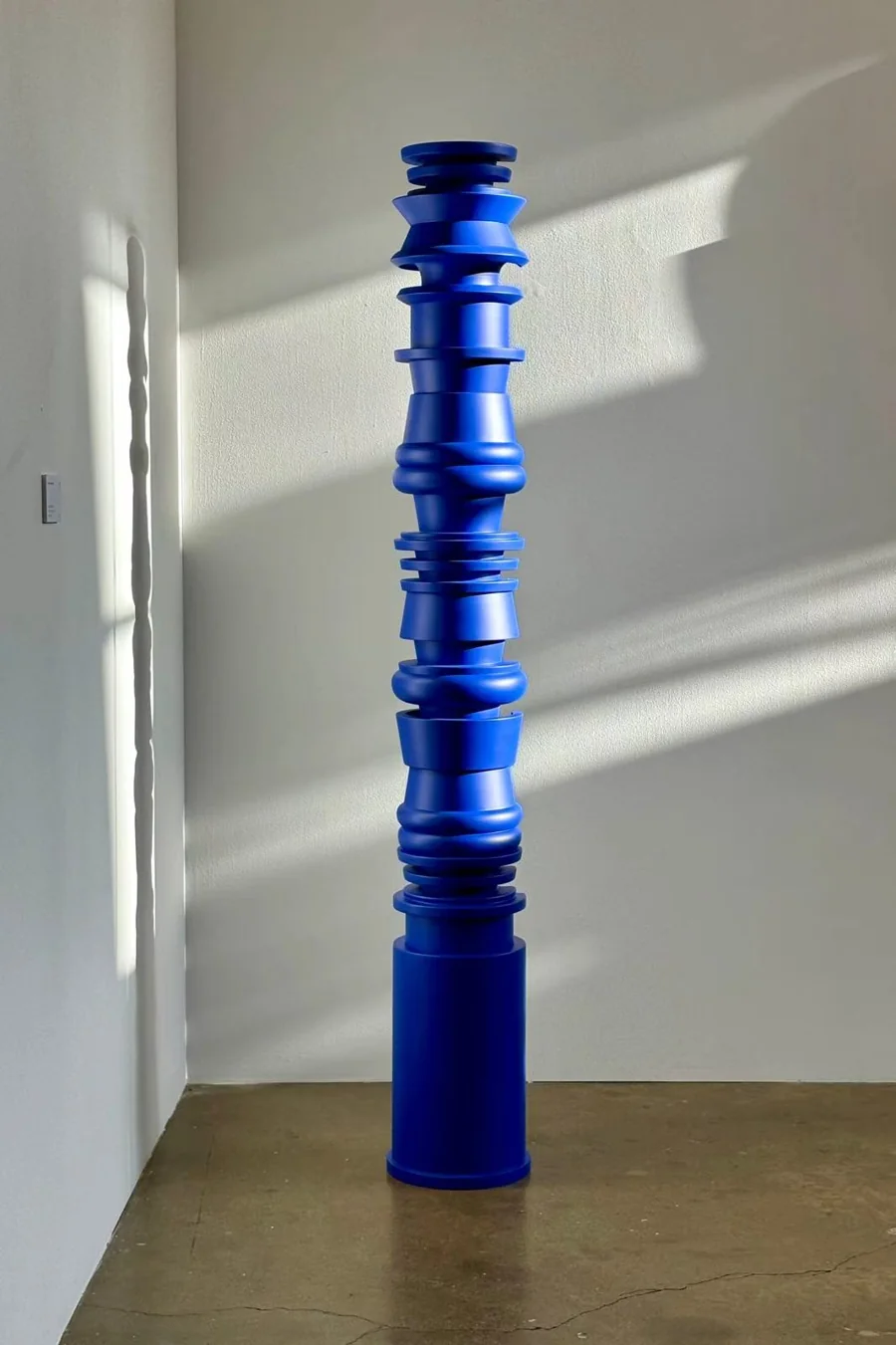
In short
Artists rarely come to us asking about a process. They come with an idea and a size. Choosing how to make it is our job, and the decision affects the cost, the surface and the time. This guide sets out the differences in practical terms.
The one question that decides most cases
How big is the piece, and how much detail does it hold?
A small form with fine, intricate surface work suits resin 3D printing. The printer resolves the detail directly, and there is no mould to cut. A large form with broad, flowing surfaces suits fiberglass. It is light for its size, strong, and can be finished in almost any colour or texture.
Between those two extremes, both routes can work. That is when cost, finish and intended location decide.
3D printing: what it is good at
3D printing builds the piece layer by layer from an STL or STEP file. In our studio, resin 3D printing handles fine detail and small maquettes, while filament 3D printing makes larger, lower-cost mock-ups that can be sanded before painting.
The strengths are clear:
- Detail. Fine edges, small text and intricate relief hold well in resin.
- Speed at small size. No mould is needed, so a single maquette can be made quickly.
- No tooling cost. For one piece, there is no mould to pay for.
- Design review. A printed maquette is the safest way to check a form before committing to a larger build.
The limits matter too. Resin and filament have size boundaries, and a large print may be made in parts and joined. Layer lines may need sanding before paint. Resin is less suited to a piece that will sit outside year-round unless it is properly coated.
Fiberglass: what it is good at
Fiberglass is laid by hand: glass fibre and resin go over a core, then the shell is sealed, filled, sanded and painted. It is the standard choice for sculptures above about 1 m, and for anything that has to travel or stand outdoors.
- Size. Pieces from around 0.3 m to 6 m are routine. Larger work is built in sections.
- Weight. A fiberglass shell is light for its size, which helps with mounting and freight.
- Finish. Matte stone, bronze effect, gradients and high-gloss coatings all start from the same base.
- Outdoor use. A UV-resistant gel coat under the paint protects the shell.
- Strength. An internal frame can be built where the form needs support.
The trade-off is time. A fiberglass piece takes weeks, not days, because much of the surface work is manual. See how long a fiberglass sculpture takes for the stages.
Side by side
| | 3D printing | Fiberglass | |---|---|---| | Best size | Small to medium | Medium to large | | Detail | Excellent in resin | Good, shaped by hand | | One-off cost | Lower at small size | Higher, includes tooling | | Outdoor use | Needs coating | Built for it with gel coat | | Finish | Primed, painted, sanded | Full paint and texture range | | Production time | Days for a maquette | 20–35 days for one piece | | Best for | Maquettes, editions of small works, fine detail | Installations, public work, large pieces |
Using both in one project
The two processes often work together. An artist sends a sketch, we build the model, and a small resin maquette is 3D printed for review. Once the form is approved, the maquette becomes the master for a larger fiberglass piece. Editions can be made from the same mould.
This route is common because it puts the cheap stage first. Changes to a printed maquette are quick. Changes to a mould are not. Our commission process is built around that sequence.
If you are starting from images rather than a file, read how a photo becomes a sculpture. If you already have a file, see STL or STEP for sculpture.
What about cost
For a single small, detailed piece, 3D printing is usually cheaper. For a larger piece or an outdoor work, fiberglass gives more value. A printed maquette adds a step, but it often prevents an expensive mistake. Our guide to how a custom sculpture is priced covers the full picture.
Which route for your piece
Send the size, a reference image and where the work will stand. We will tell you which process fits, what the finish will involve, and what it will cost. You can see both kinds of work in the portfolio, with real sizes and materials. To ask about your own piece, use the enquiry form.