Outdoor Sculpture Colour Matching: From a Chip to the Final Coat
How a colour reference becomes a sample panel, why outdoor sculptures need a different build-up from indoor ones, and how we keep a gradient consistent across a large piece.
Published 2026-11-24 · HengSculpt
In short
A colour on a screen is a poor instruction. Monitors vary, and a photograph rarely shows the true tone. A sample panel gives both sides the same object to look at under the same light, and it removes most of the guesswork from the final stage of a commission.
What to send as a reference
A physical chip is the most reliable option. Paint a small card, send a fabric swatch, or cut a piece from a sample you already have. We can hold it against our mix under studio light and adjust from there.
If a physical sample is not possible, send a RAL or Pantone code together with a photo taken in daylight. The code gives us a starting point and the photo tells us how the colour reads in context. For work that will sit beside an existing piece, photograph both together so we can judge the light and the neighbour tone.
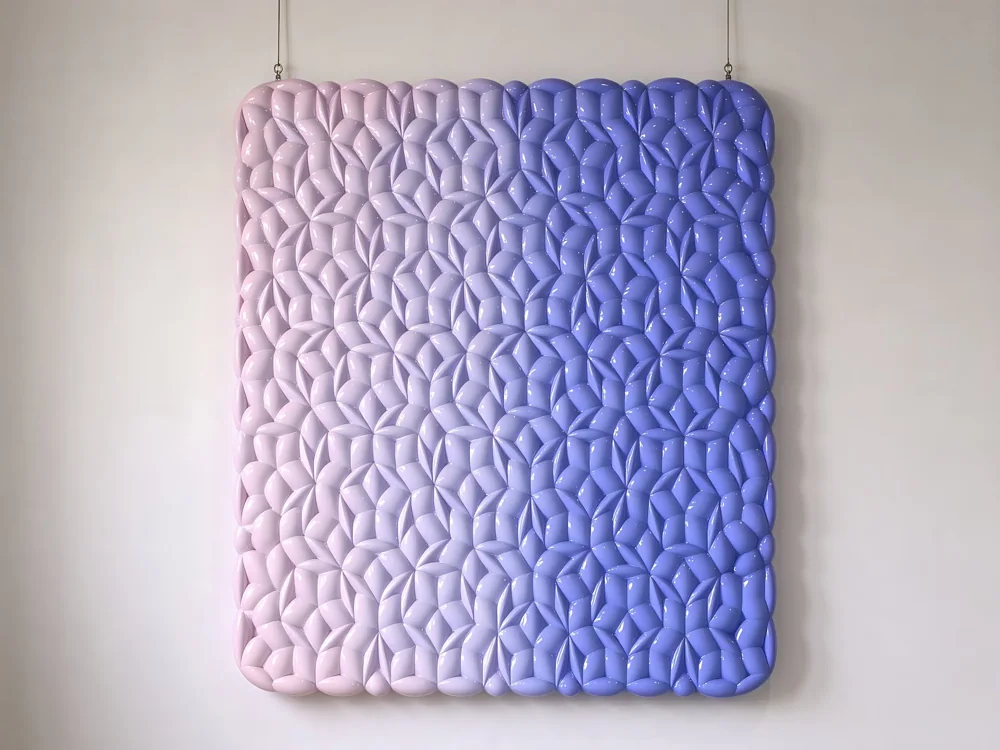
Gradients need one more piece of information: where the colours start and end. A note such as "pink at the top left, blue at the bottom right, soft blend" is enough, but a marked-up photo is clearer. The gradient petal panel shown here was built that way, from a reference the artist sent with the first enquiry.
Why outdoor pieces are built differently
Sunlight, rain and temperature changes are harder on a surface than a gallery is. An outdoor fiberglass sculpture gets a UV-resistant gel coat under the paint. The gel coat shields the laminate and gives the top coat a stable surface to sit on.
Paint alone is not the right answer outside. A good top coat over a poorly prepared shell will still fade, crack or lift. The specification matters more than the brand of paint. We build the surface for the site, not for the photograph.
For a piece that lives near the sea or in a frost climate, tell us. The coating schedule and the sealing of the seams can be adjusted, and it is much easier to decide that before the piece is made.
The sample panel step
We paint a small panel in the chosen finish, matte or gloss, and send it to you. Approve that panel and we use the same mix on the sculpture. If the tone is slightly off, we adjust and send a new panel. This is quick compared with repainting a finished piece.
The panel is also our record. When you order a second copy months later, we can match the first one without relying on memory. That matters for small editions, where consistency across copies is part of the work.
Eco-friendly automotive paint
All painted pieces in the studio use eco-friendly automotive paint with a clear coat. It gives a hard, even surface and keeps solvent exposure lower for the team. Matte stone, bronze effect and high-gloss finishes all start from the same base system.
For a bronze look, a fiberglass core is coated to read like metal without the weight of cast bronze. The finish is still paint, so it needs the same care as any coated surface. It will not develop a natural patina, which for many artists is exactly the point.
Separate colours on one piece are masked and sprayed in stages. You can see the process in our work in progress. Clean edges come from careful masking, not from painting faster.
Colour and scale
A small sample can look different on a large sculpture. The eye reads a broad field of colour differently from an isolated chip, and gloss changes that again. We check the tone on the finished piece against the approved panel before packing. If something is off, we say so first rather than shipping and hoping.
Gradients are the trickiest case. We map the transition across the actual surface, then spray in controlled passes so the blend stays soft. On a piece with hundreds of small forms, like the petal panel, each form has to catch the colour in the right place. The artist's reference stays on the bench throughout.
Planning a piece for outside
Send the approximate size, the site conditions and your colour reference with your enquiry. We will confirm the build-up, the finish and the lead time in the quote. If you are still deciding how the piece will be made, our guide to fiberglass and 3D printing for sculpture may help.
When the piece is finished, it is packed for travel in a case sized for the work. Our note on shipping a large sculpture explains how that is handled. To start a conversation, use the enquiry form.